
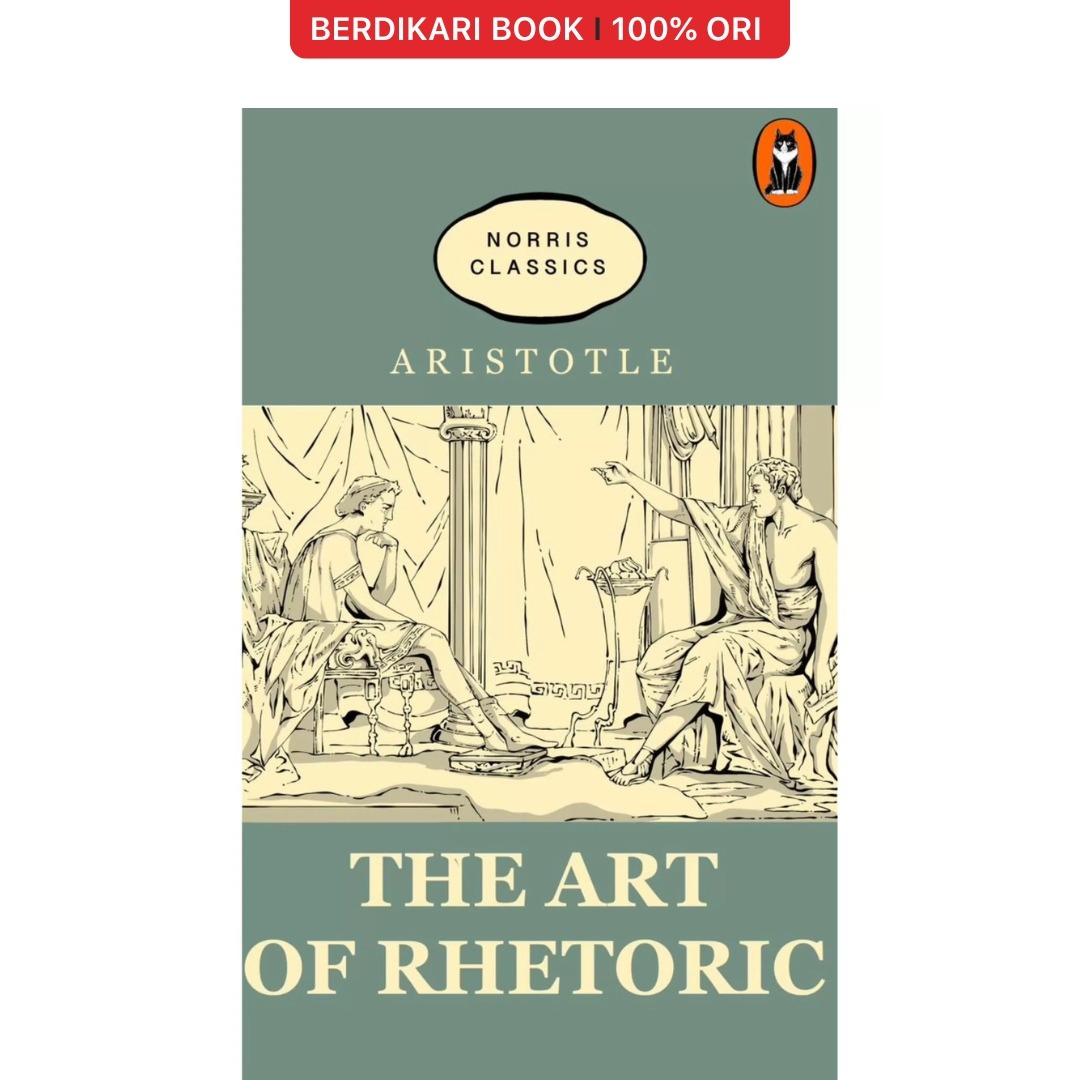
Aristoteles; The Art of Rhetoric (English Version) - Norris Book
Aristotle developed the Rhetoric during two periods when he was in Athens, the first, from 367–347 BCE (when he was second to Plato in the academy); and the second, from 335–322 BCE (when he was running his own school, the Lyceum).
ㅤㅤ
The study of rhetoric was contested in classical Greece: on one side were the sophists, and on the other were Socrates, Plato, and Aristotle. The trio saw rhetoric and poetry as tools that were too often used to manipulate others by appealing to emotion and omitting facts. They accused the sophists in particular—including Gorgias and Isocrates—of this sort of manipulation. Plato blamed sophistical rhetoric for the arrest and the death of Socrates. In contrast to the emotional rhetoric and poetry of the sophists was a type of rhetoric grounded in philosophy and the pursuit of enlightenment.
ㅤㅤ
Aristotle identified rhetoric as one of the three key elements— along with logic and dialectic—of philosophy. The first line of the Rhetoric is: “Rhetoric is a counterpart (antistrophe) of dialectic” According to Aristotle, logic is concerned with reasoning to reach scientific certainty, while dialectic and rhetoric are concerned with probability and, thus, are the branches of philosophy that are best suited to human affairs. Dialectic is a tool for philosophical debate; it is a means for skilled audiences to test probable knowledge in order to learn. Rhetoric is a tool for practical debate; it is a means for persuading a general audience using probable knowledge to resolve practical issues. Dialectic and rhetoric partner to form a system of persuasion based on knowledge instead of upon manipulation and omission.
ㅤㅤ
Penulis: Aristotle
Penerbit: Norris Book, 2024
Kategori: Classics
ISBN: 9786230977718
SKU: BRD21533
Bahasa: English
Dimensi: 11,5 x 17,5 cm l Sofcover
Tebal: 270 hlm l Bookpaper
Harga: 95.000